
Construction Staking Survey for Infill Apartment Projects on Tight Urban Sites
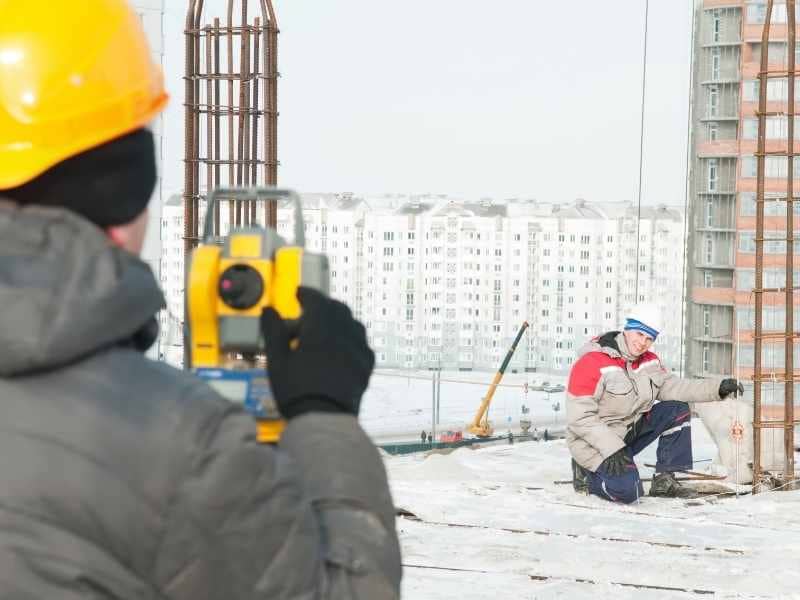
Building an apartment on a tight city lot is not like building on open land. There is less room for mistakes, less space to move around, and neighbors on almost every side. A construction staking survey gives crews the exact points they need to build in the right spot, at the right height, and without stepping on anyone else’s property. When space is tight, this kind of accuracy is not a nice extra. It is the thing that keeps the whole project on track.
This article walks through why staking matters so much on infill sites, how it helps teams work around what is already there, and how it keeps trades from bumping into each other. By the end, you will know what to expect from a staking survey on a small urban apartment site and why it plays such a big role in getting the project built right.
Why Tight Urban Apartment Sites Require More Precise Construction Staking
Open land gives builders room to breathe. A city lot squeezed between two other buildings does not.
On infill sites, crews often work with just a few feet of buffer space. Equipment has to move in tight paths. Materials get stored close to the work area because there is nowhere else to put them. Every wall, footing, and property line has to land exactly where the plans say it should.
That is where staking comes in. A surveyor marks the ground with points and flags that show crews exactly where to dig, pour, and build. On a wide open lot, being off by a few inches might not cause a problem. On a narrow infill site, that same small error can push a foundation too close to a property line or crowd an access path that trucks need later.
Nearby buildings raise the stakes even more. Crews need to know where their site ends and the neighbor’s begins. They also need to protect sidewalks, fences, and other features that are staying in place. Precise staking gives everyone a clear picture of the boundaries before the first shovel hits the ground.
Coordinating Building Layout With Existing Urban Site Constraints
Infill sites rarely start empty. There might be an old sidewalk to work around, a retaining wall to keep, or underground utilities that cannot move. Staking helps the team fit the new building into that existing puzzle.
Surveyors set points for the foundation corners, walls, and parking areas based on the approved site plan. But they also account for what is already there. If a utility line runs close to a planned wall, the stakes show exactly how much clearance the crew has. If a curb or sidewalk stays in place, staking marks how the new construction lines up with it.
This kind of coordination saves time. Crews are not guessing how close they can build to a fence or a neighbor’s foundation. They have field points that show them the safe path forward. On a site where space is already tight, that clarity keeps the project moving instead of stalling out over layout questions.
Managing Vertical Control for Multi-Story Infill Apartment Construction
Height matters just as much as position on an infill apartment build. Multi-story buildings need accurate elevation control from the first foundation pour all the way up.
A staking survey sets vertical reference points, often called benchmarks, that crews use to check elevations throughout construction. These points guide the height of building pads, foundation footings, and finished floor levels. Get an elevation wrong early, and that error can carry through every floor above it.
Drainage is another reason elevation control matters so much. Water has to move away from the building, not toward it. Precise elevation points help crews grade the site so runoff flows the right way and connects properly to storm drains or existing streets.
Infill sites also have to blend into the surrounding street level. The new building’s entrance, sidewalks, and grading need to line up with what is already there. Without careful vertical control, transitions between old and new can end up uneven or even unsafe.
How Construction Staking Helps Prevent Conflicts Between Multiple Trades
An apartment build brings in a lot of different crews. Foundation teams, utility crews, grading crews, and concrete finishers all need to work in the same tight space, often at overlapping times.
Accurate staking gives every trade the same set of reference points. That shared information cuts down on confusion. A utility crew knows exactly where a foundation wall will sit. A concrete crew knows exactly where a driveway needs to meet the curb. Nobody has to guess what another team has already marked out.
Small errors that seem minor at first can grow into bigger problems fast. A pipe placed a foot off course might conflict with a footing that gets poured later. A grading crew working from outdated marks might create a slope that does not match the final plan. Once concrete is poured, fixing these conflicts gets expensive and slow.
Reliable staking catches these issues before they happen. It keeps every trade working from the same accurate picture of the site, so their work fits together instead of colliding.
Supporting Faster Construction Decisions on Limited Urban Sites
Urban apartment projects rarely go exactly as planned. Conditions change. An unexpected utility line turns up. A neighboring wall is not quite where old records said it was. When that happens, the project team needs good field information to make quick decisions.
Reliable staking gives them that. Instead of pausing the job to figure out where things actually sit, the team can check accurate points and adjust with confidence. This cuts down on delays and reduces the chance of costly rework.
On a site with little room to spare, uncertainty is expensive. A crew that is not sure exactly where a wall line falls might slow down out of caution, or worse, build in the wrong spot. Clear staking removes that guesswork. It keeps the schedule moving even when the site throws a curveball.